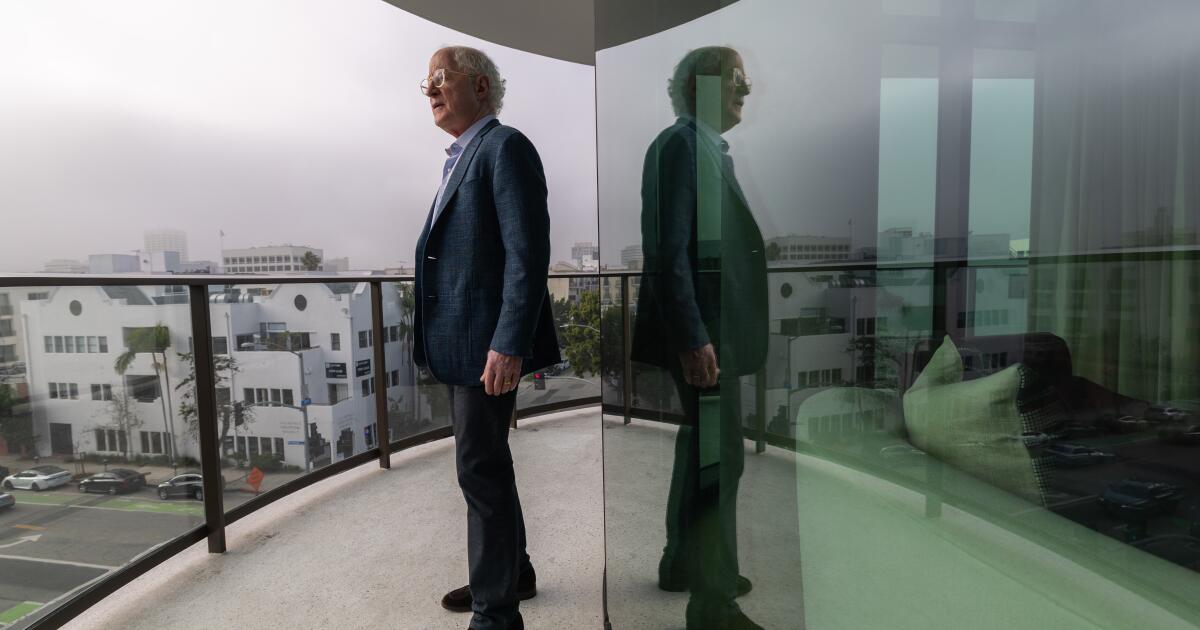

Downtown L.A. is doing better than you think it is, but the government needs to do more to energize the city, said one of the region’s longest and most successful real estate leaders.
Bill Witte is retiring after running Related California, a large-scale developer of both luxury and low-income apartments, for more than three decades.
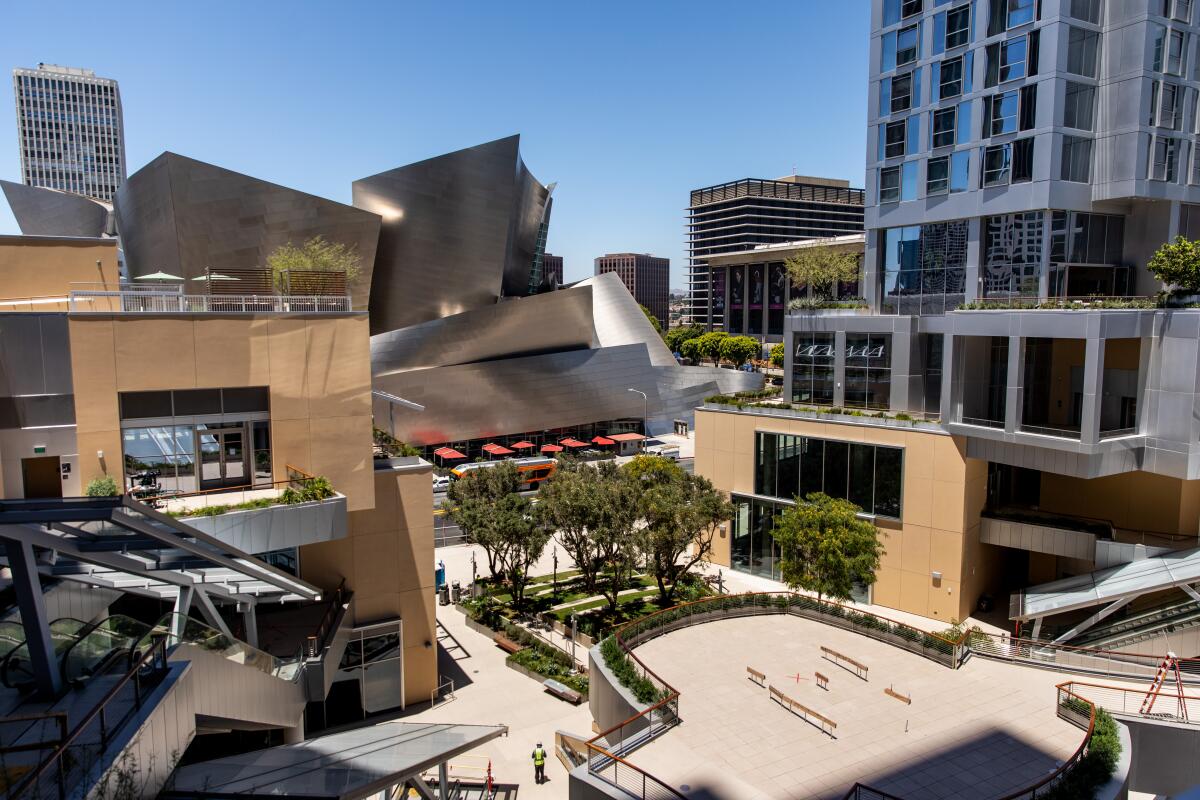
The Grand LA, designed by Frank Gehry and developed by Rick Vogel, executive vice president at Related, is located across from the Walt Disney Concert Hall.
(Jay L. Clendenin / Los Angeles Times)
Among the high-profile projects he oversaw was the creation of the Grand LA, a $1-billion mega-project with housing, a hotel and restaurants designed by Frank Gehry across the street from the architect’s famous Walt Disney Concert Hall in downtown Los Angeles.
Witte founded Related California in 1989 with Stephen M. Ross, chairman of New York-based Related Cos. Related California is now one of the largest real estate companies on the West Coast with a portfolio of more than 21,000 residential units, including the Century condominium skyscraper in Century City, where television heiress Candy Spelling lives on the top two floors.
Related’s most recent project is 700 Broadway in Santa Monica, an upscale apartment complex with a private park, a grocery store and an Equinox Fitness Club. Related is also building a housing project for low-income families and seniors called Alveare in downtown Los Angeles’s South Park neighborhood.
Witte’s interest in development dates to his childhood in New York. His father was a builder, and young Witte enjoyed tramping around construction sites.
“I developed a fascination with cities,” he said.
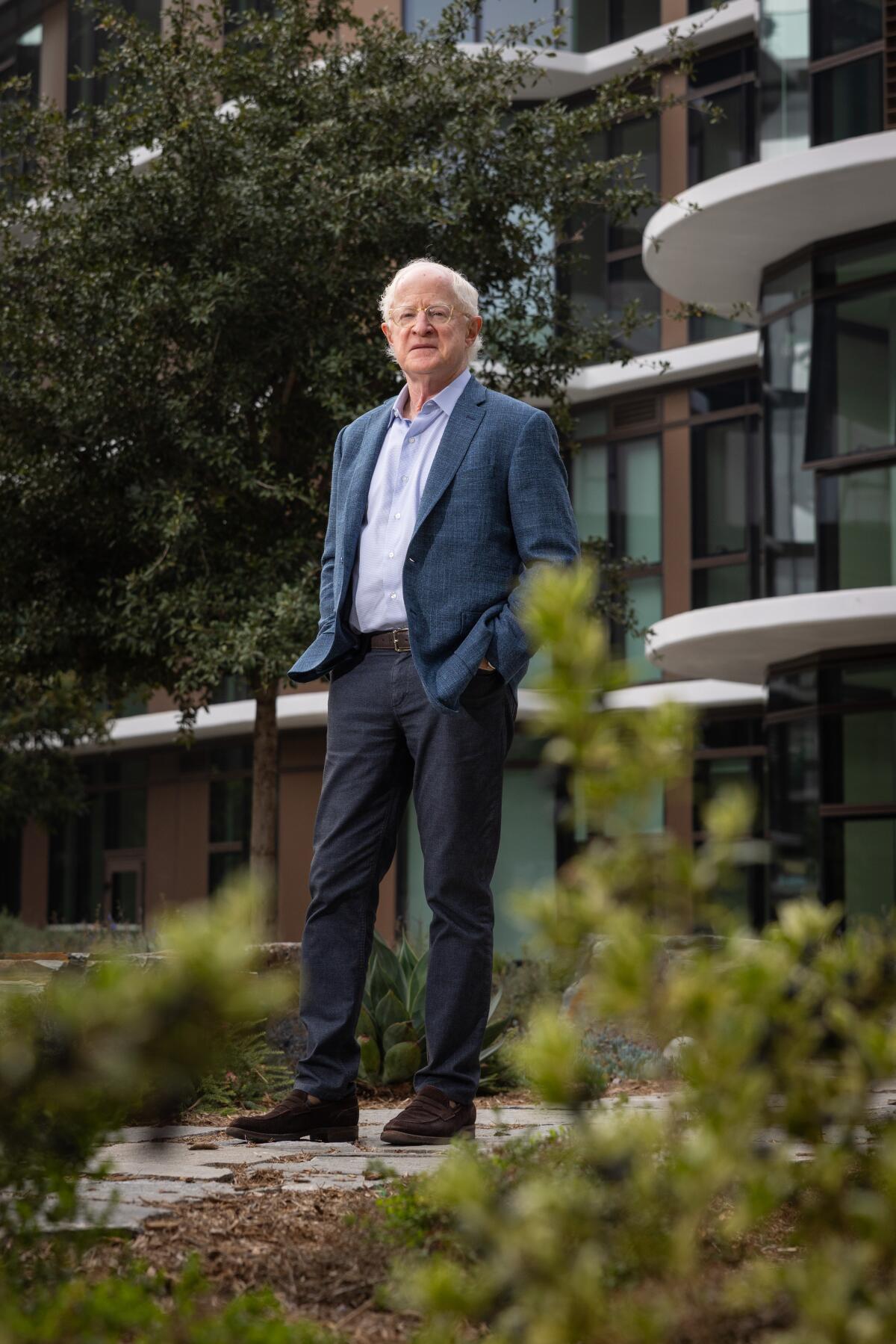
Bill Witte at 700 Broadway in Santa Monica.
(Jason Armond / Los Angeles Times)
He went on to earn degrees in urban studies and urban planning from the University of Pennsylvania and broke into the field as a member of the Philadelphia planning staff in the freewheeling administration of Mayor Frank Rizzo in the mid-1970s, when the city had 25,000 abandoned housing units.
“It was very parochial in Philadelphia, part Rust Belt and part ‘Sopranos,’ ” Witte said. “I loved it.”
Witte later served as San Francisco’s deputy mayor for housing before joining Related Cos. More than 35 years later, he is stepping down as chairman Jan. 1. Succeeding him will be Gino Canori as chief executive of Related California’s market-rate division, and Ann Silverberg as chief executive of its affordable division. Witte will become chairman emeritus.
The Times met with Witte to discuss the challenges facing the region and the real estate industry in the years ahead. His answers have been edited for clarity and brevity.
Downtown’s reputation has suffered since the pandemic as many people express concern about homelessness and safety. How could it get back on track?
First of all, I’d say, it’s not as bad as you think it is. It’s better than you think it is. It’s still the cultural core of the region.
I don’t have a single magic bullet for addressing the homeless problem. It’s not just about bricks and mortar and shelter. It’s got all sorts of issues attached to it. I’m not completely happy with everything that’s gone on in L.A., but frankly, I think Mayor Bass and her team have done a pretty good job since they’ve been in office, trying to address the homeless problem. They’re making some progress.

700 Broadway, Bill Witte’s latest luxury apartment complex project.
(Jason Armond / Los Angeles Times)
I’m told that the sidewalks are cleaned like once a month. It has to be more frequent.
You really have to go out of your way to show that you’re trying to make a difference. I’m told there are food carts and things near the entrances of buildings. You add all these things together, and if you’re going to work downtown, it’s not the most welcoming environment.
They always say don’t sweat the small stuff, but I think it’s the small stuff that ultimately makes a difference here.
Prominent firms have decided they’d rather have their offices somewhere else, such as Century City or Pasadena. What can be done about that?
I think the city, the mayor’s office, needs to become very engaged in talking to tenants who are still here. What are the problems downtown? What can we do about them? We’ve seen a very big change in San Francisco in that regard, actively promoting the city and taking steps. I think there needs to be active discussions with people, including some who have left downtown.
Make sure that people’s security needs are being addressed, have some visible success stories and actively promote it. Downtown is just one neighborhood in the whole city, but it’s probably the one that was most affected by the pandemic.
What do you say about complaints about the lack of public-sector employees downtown, which makes the sidewalks, stores and restaurants less busy?
What do you think the private sector thinks when the government, with taxpayer dollars, can’t seem to get people to come back to the office? That is not helpful. There are examples where the private sector looks and says, ‘Wait a minute, maybe we shouldn’t be here either.’
The real estate community has been critical of 2022’s Measure ULA, saying it cuts into profits and makes developments financially unfeasible. How is it affecting your company?
We’re on both sides of that. Our Alveare project that just started in construction has 105 affordable units for low- and extremely low-income families, got $10 million from the city’s ULA funds.
1

2

3

4

1. Bill Witte, real estate developer, tours 700 Broadway-his firm’s newest luxury apartment complex project on Tuesday, Dec. 16, 2025 in Santa Monica, CA. (Jason Armond/Los Angeles Times) 2. Bill Witte, real estate developer, tours 700 Broadway-his firm’s newest luxury apartment complex project on Tuesday, Dec. 16, 2025 in Santa Monica, CA. (Jason Armond/Los Angeles Times) 3. Bill Witte, real estate developer, tours 700 Broadway—his firm’s newest luxury apartment complex project on Tuesday, Dec. 16, 2025 in Santa Monica, CA. (Jason Armond/Los Angeles Times) 4. Bill Witte, real estate developer, tours 700 Broadway-his firm’s newest luxury apartment complex project on Tuesday, Dec. 16, 2025 in Santa Monica, CA. (Jason Armond/Los Angeles Times)
In the market-rate commercial real estate world, it’s a problem. It is not helpful. It’s part of the package of things that the investment community has been concerned about in L.A. You can agree or disagree whether that should be true, but it is a fact. And I know Mayor Bass is trying to work on some modifications to make it perhaps less onerous. But again, it comes up because there is no obvious source of funds for affordable housing.
Sometimes there is pushback from neighbors when affordable housing is proposed. How would you address their concerns?
We’ve done almost 20,000 units across the state, including in L.A., and we’ve taken just neighbors on bus tours of some of our existing developments that are not just new but maybe 10 years old.
It’s not just us. The affordable housing world has grown significantly over the years, including qualitatively. Most projects have on-site services and the design is getting better. We’ve won more design awards for affordable housing in California than any other developer.
It doesn’t always require spending gobs more money. It’s being thoughtful, thinking about the long term, thinking about the public spaces, which is what brands these projects. And since we’ve often done affordable development next to or as part of market-rate housing, it forces us to think that way.
I think the financial side is the bigger challenge right now. You will hear pushback that these things are ridiculously expensive — $800,000 a unit to build. Why is that? Well, first of all, everything is more expensive. But there is a longtime tendency, not just in L.A., to apply a whole series of admittedly desirable public policy objectives onto affordable housing because the government is involved.
Some of it is labor standards, higher disability requirements — all of that adds to the cost. You can argue on their behalf, but I think local and state governments are beginning to understand that it’s going to be very difficult to keep selling initiatives here, not because of NIMBYism, but because it’s hard to justify the cost.
There is a perception among developers that it is tough to build a financially successful project in L.A beyond such money-related challenges as construction costs, labor shortages and high interest rates faced by developers in other California cities. Why is that?
You’ve got a relatively young City Council that has been pushing some very progressive goals, not just on housing, but also on minimum wage and other issues.
The challenge for L.A. right now in the growth area is sending some signals to the entities that provide debt and equity to these projects that you are very concerned with protecting existing tenants who are income- and rent-stressed, but you’re not opposed to some growth. Without growth, there’s not going to be any growth in revenues and the city’s budget is going to continue to be stressed.
There are other parts of the state where the investment community looks more favorably for that reason.