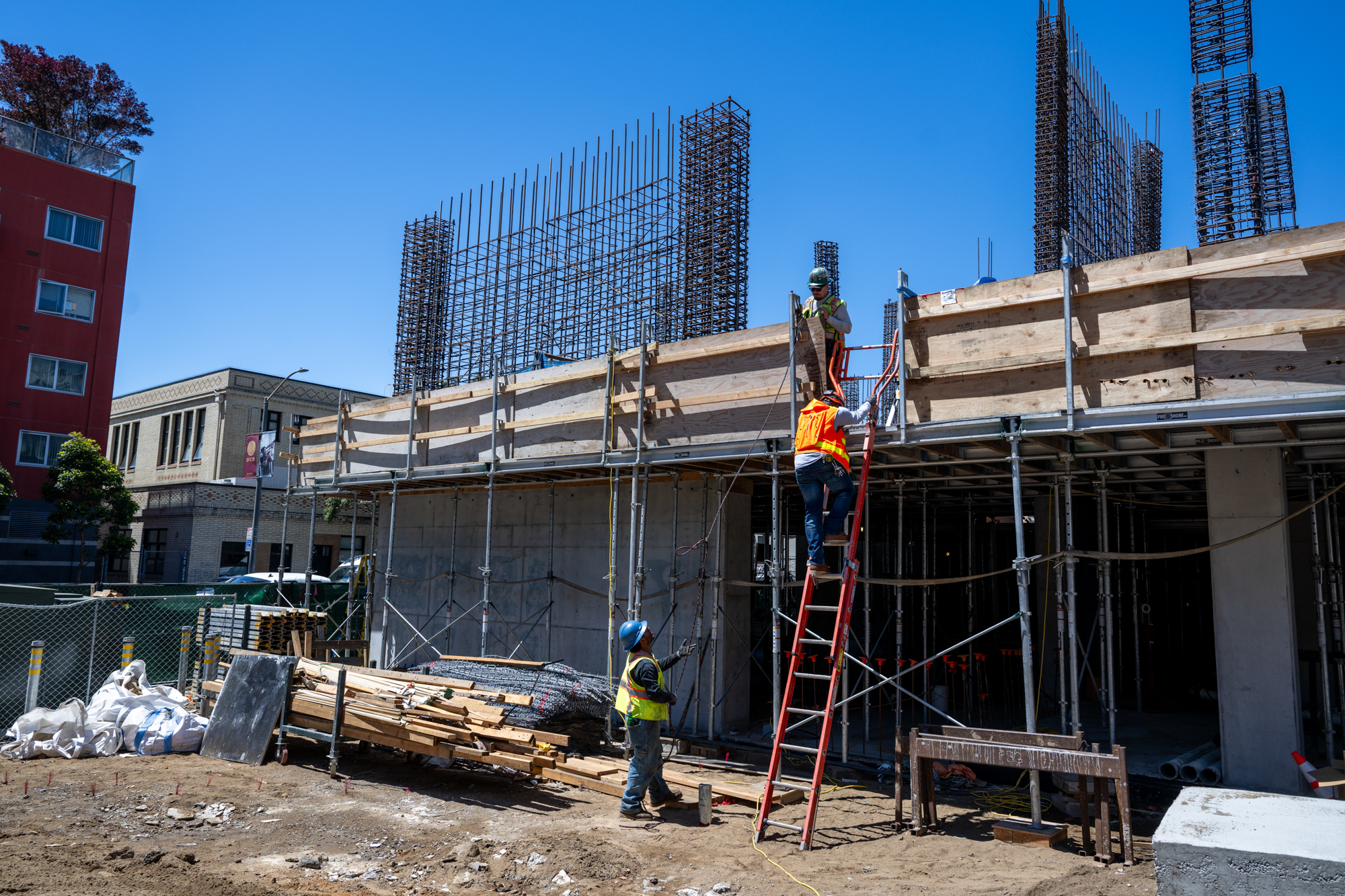
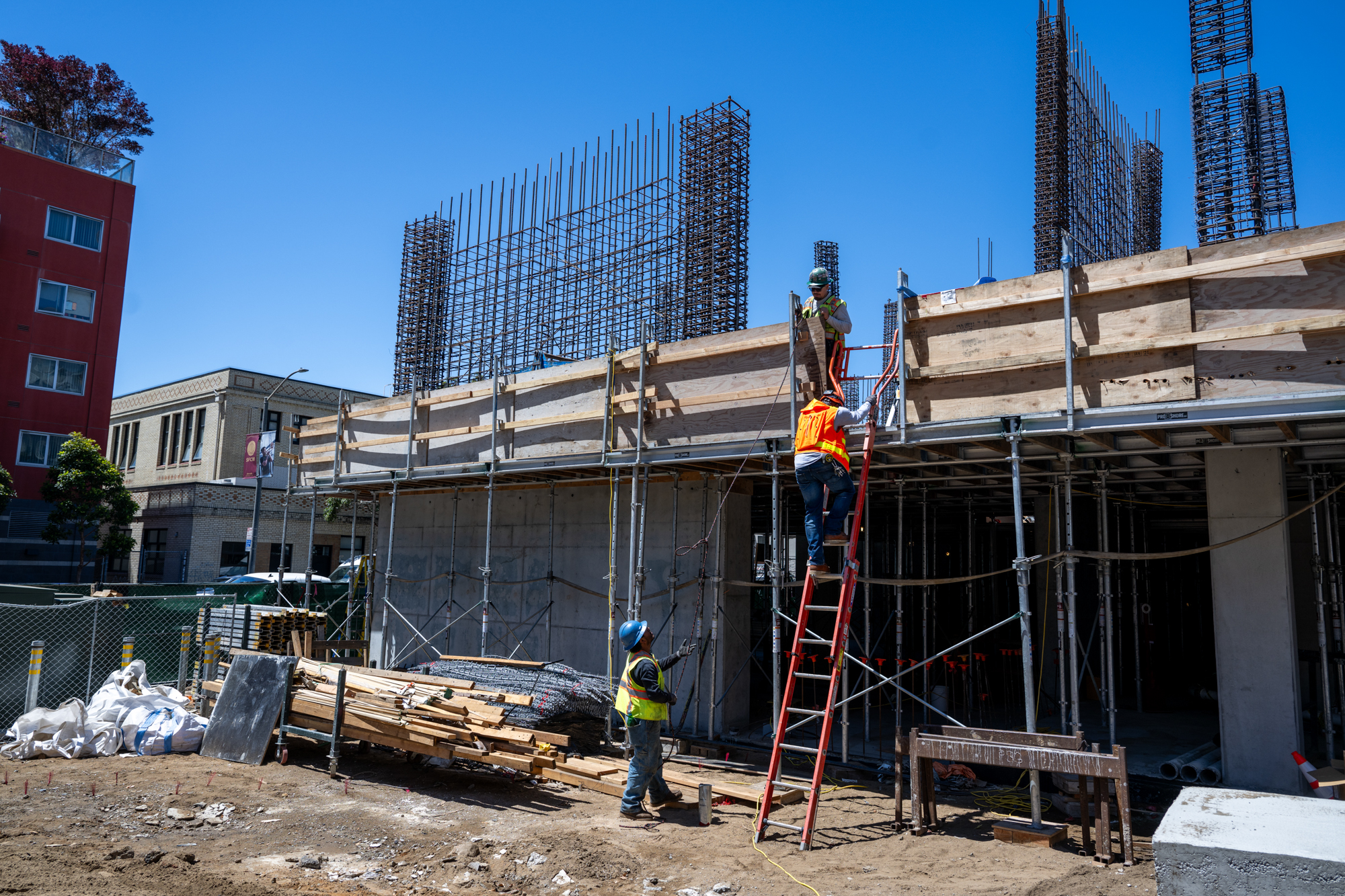
“If the infrastructure doesn’t exist, you have to create that infrastructure,” Rhine said. “And since we’re limited in how we can charge or generate revenue to fund that infrastructure, it really falls on the development community.”
Developers said these fees don’t necessarily break a project, but they can shape what it looks like, what amenities are included and how quickly it can be built.
Nick Friend is the chief lending officer at Housing Trust Silicon Valley, a financial institution that provides loans for affordable housing projects across the Bay Area.
He said higher impact fees can affect the number of family-sized apartments versus studios and one-bedrooms in a development. It can also mean using cheaper building materials and reducing the amount of common space.
That can result in projects sometimes looking half-built with “spaces for amenities yet to come,” he said. “Spaces might be left empty, when they are imagined [to be], say, a playground or a landscape design feature or something.”
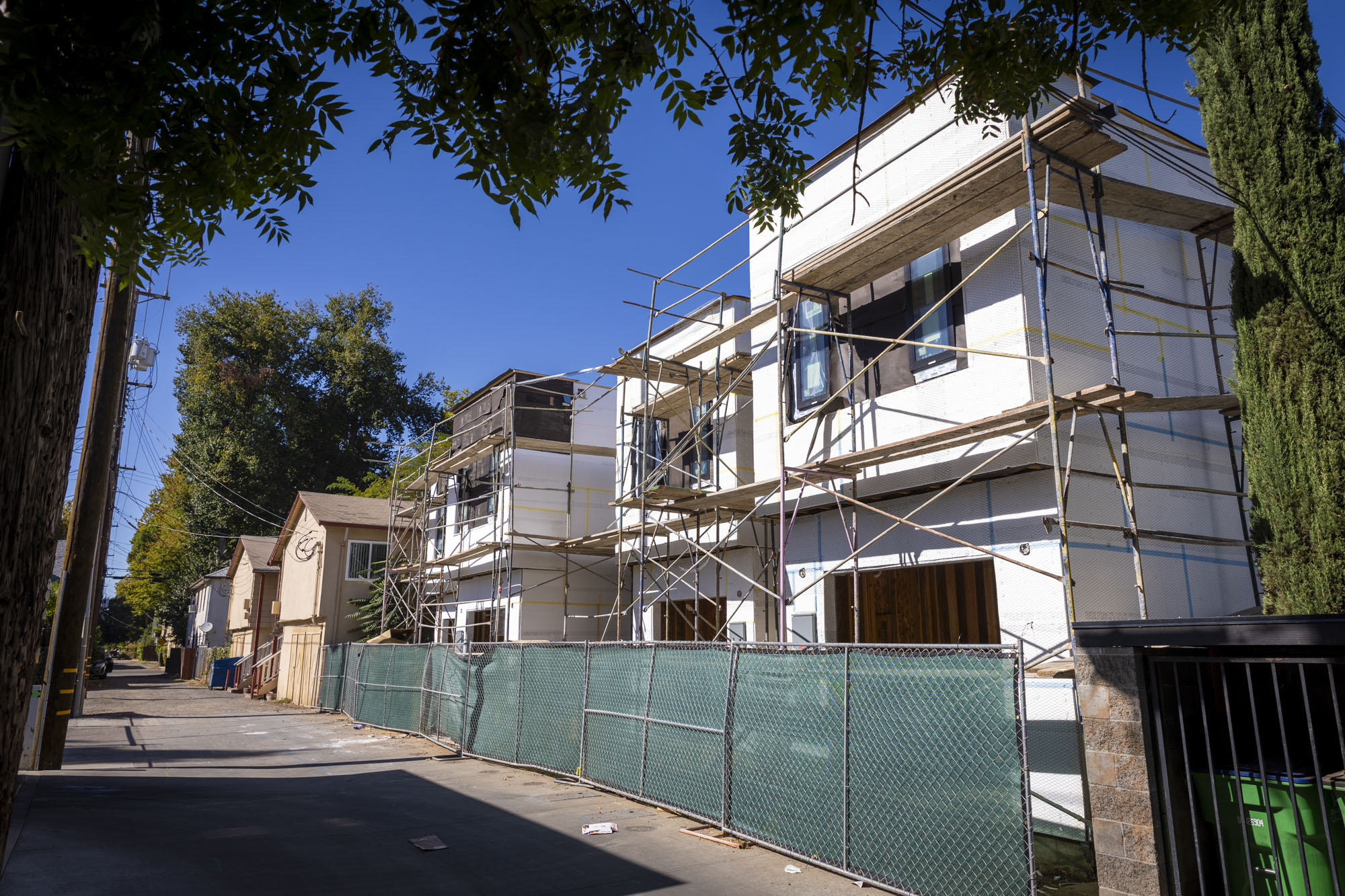 A site of new middle housing units is under construction at 2824 D St. in Sacramento on October 7, 2025. Developers are reviving “middle housing” such as duplexes and cottage clusters, but say California’s rollout of the new rules has been anything but smooth. (Tâm Vũ/KQED)
To avoid those compromises, some developers told KQED they try to work with cities to waive the fees or wait to pay them until tenants are ready to move in. The city of Palo Alto waived the impact fees for Mitchell Park Place, a recently completed affordable apartment building with 50 units, including some set aside for people with disabilities.
The waiver meant more than $3 million in cost savings for Eden Housing, the developer. “Most of the cities would like to build the housing, so they’d like to find a solution, particularly [for] affordable housing,” said Linda Mandolini, president and CEO of the nonprofit.
But some developers and housing activists argue there are other cities that impose hefty impact fees as a way to shut out development entirely.
The Housing Action Coalition recently announced it had sent a letter to the Manhattan Beach City Council and had complained to the state’s housing agency after the city proposed increasing its impact fees for multifamily housing by almost three times more per square foot than for single-family homes.
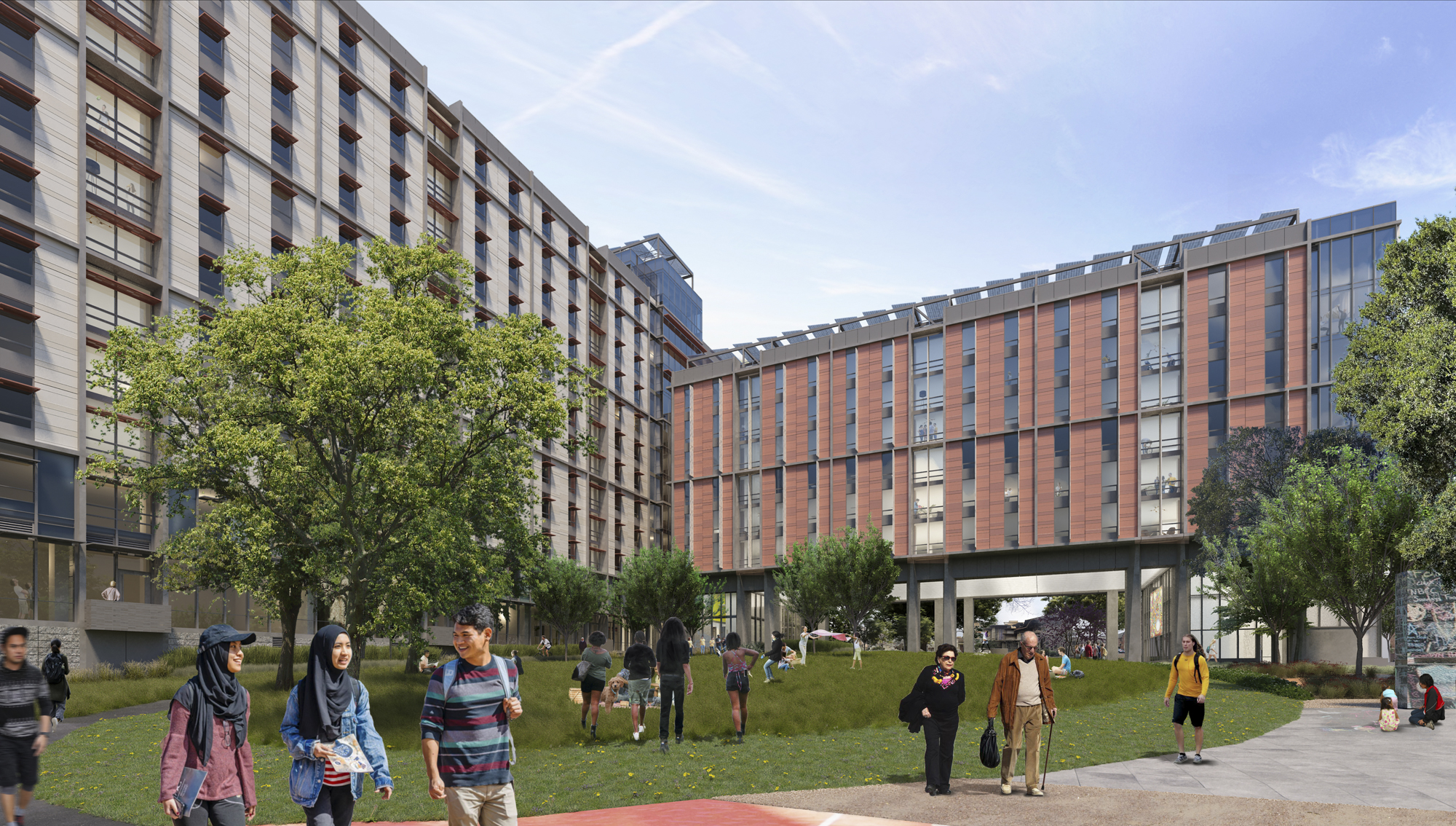 The university will work with Satellite Affordable Housing Associates, a Bay Area nonprofit, to build the permanent supportive housing project on Berkeley’s People’s Park. A rendering of the proposed permanent supportive housing project that will include at least 100 units for people exiting homelessness and for low-income residents. (LMS Architects/Hood Design Studio)
“Manhattan Beach can plan for infrastructure needs without adopting policies to deter the multifamily and below-market housing it is required to encourage [under state law],” Jesse Zwick, the coalition’s southern California director, wrote in the letter.
To spur housing construction and make sure cities can reach their state-mandated housing goals, lawmakers have recently passed laws aiming to lessen the burden of impact fees. The new rules require cities to provide an estimate of the fees early in the development process and allow certain types of projects to pay them once construction and inspections are complete.
Cities are under more scrutiny to approve and build housing as the state’s affordability crisis worsens. Developers argue that if it’s easier for them to build housing, the cities can meet their goals faster. But for many cities with already-tight budgets and few resources on hand, forgoing impact fees is not necessarily a win-win.
“Ideally, we’d have a state fund that would fund impact fees or development fees on behalf of affordable housing developers,” Rhine said. “Right now, the bit of the trade-off really is if a developer is not going to pay those fees, somebody’s going to go without a park or a library or a service.”